
Copenhagen museums: The best places to experience Danish creativity
Copenhagen is a city built on creativity. From its colourful harbour fronts and historic streets to its world-famous architecture and innovative design scene, Denmark’s capital has always celebrated the connection between beauty, function, and storytelling.
What makes Copenhagen’s museum scene so special is its incredible diversity. Within the city, you can discover everything from royal treasures and Viking history to Danish Golden Age paintings, contemporary installations, and groundbreaking design. But Copenhagen’s cultural landscape extends far beyond the city centre. Along the coast, surrounded by forests, beaches, and open landscapes, you’ll find some of Denmark’s most inspiring museums. Places where art and architecture become part of nature itself.
For design enthusiasts, Copenhagen is a dream destination. The same attention to detail found in Danish furniture, architecture, and everyday objects is reflected throughout its museums. Buildings are not simply containers for collections. They are part of the experience. Historic palaces, modernist masterpieces, and transformed industrial spaces reveal a city that understands how art, design, and the spaces we inhabit influence the way we see the world.
For history nerds, Copenhagen offers the chance to step into the stories that shaped Denmark. Ancient treasures, royal collections, Viking discoveries, and personal objects bring the past to life, reminding visitors that history is not only about dates and events. It is about people, creativity, ambition, and everyday moments.
And for art lovers, the city delivers an impressive journey through centuries of creativity. Explore classical sculpture, Danish masterpieces, international modern art, and experimental contemporary works. All while experiencing some of Scandinavia’s most beautiful museum architecture.
This guide takes you through some of the best museums in Copenhagen and beyond, from hidden gems in the heart of the city to world-class destinations by the sea. Each museum offers something different, but together they tell a larger story: a story about Denmark’s relationship with art, design, nature, and innovation. Because in Copenhagen, museums are not just places to look at things. They are places to connect with the past, experience the present, and imagine the future.
Thorvaldsens Museum
Bertel Thorvaldsens Plads 2
If there’s one museum that perfectly captures Copenhagen’s love for art, design, and architecture, it’s Thorvaldsens Museum. Nestled beside Christiansborg Palace, this remarkable museum is far more than a home for sculptures. It’s a work of art in itself. Long before Denmark became synonymous with Scandinavian design, Bertel Thorvaldsen was putting Danish creativity on the international map, and today his legacy continues to inspire visitors from around the world.
Why visit Thorvaldsens Museum?
Opened in 1848, Thorvaldsens Museum is Denmark’s oldest public museum and one of Copenhagen’s architectural treasures. It was built to house the life and work of the celebrated Danish sculptor Bertel Thorvaldsen, who spent much of his career in Rome before returning home as a national hero.
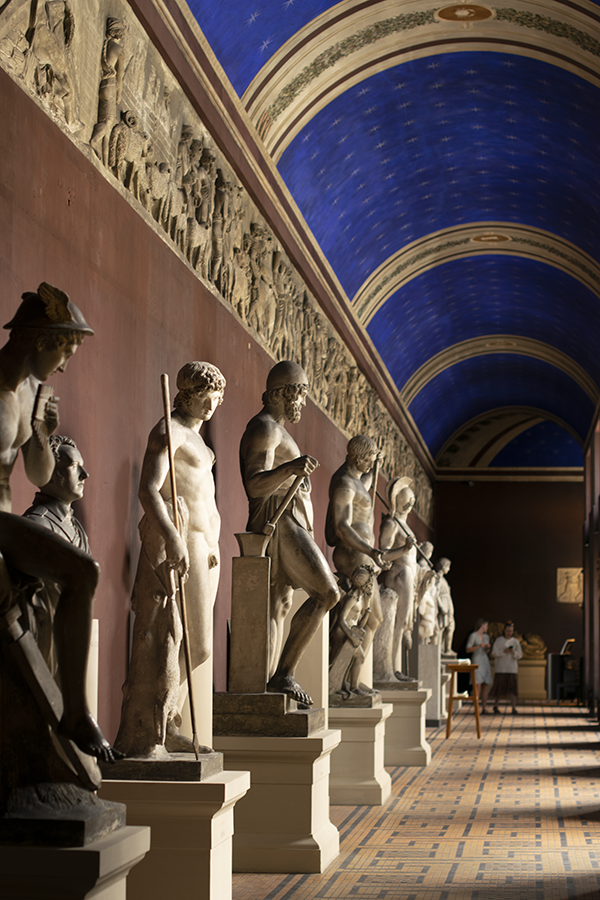
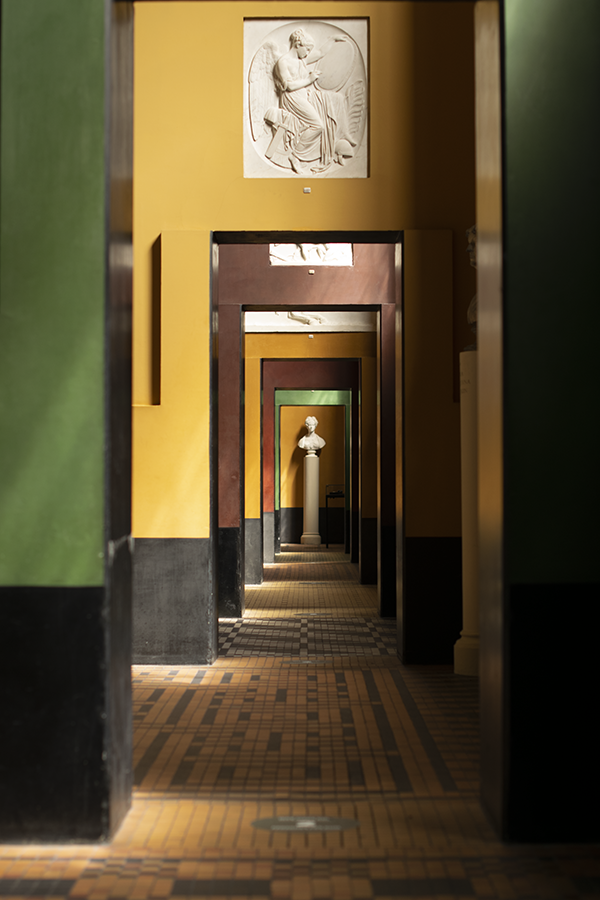
Unlike many traditional art museums, every room here feels carefully designed. Vibrant Pompeian-inspired colours, decorative ceilings, intricate mosaic floors, and beautifully lit galleries make the building just as captivating as the sculptures it contains. It’s the kind of place where you’ll find yourself admiring the walls and windows just as much as the artworks.
Where art meets architecture
For architecture lovers, Thorvaldsens Museum is a destination in its own right. Designed by architect Michael Gottlieb Bindesbøll, the museum broke with the architectural conventions of its time and remains one of Denmark’s most distinctive buildings.
The courtyard
The museum’s colourful courtyard is a destination in itself. Quiet, beautifully proportioned, and filled with history, it’s the perfect place to pause before or after exploring the galleries.
☞ Step into the peaceful inner courtyard, where Thorvaldsen himself is buried beneath a simple bed of roses. A tribute to one of Denmark’s greatest artists. The museum’s harmonious blend of architecture, sculpture, colour, and natural light creates an atmosphere unlike anywhere else in Copenhagen.
More than a sculpture museum
Even if classical sculpture isn’t usually your first choice, Thorvaldsens Museum has a way of surprising visitors. Alongside marble masterpieces, you’ll discover plaster models, sketches, personal collections from Thorvaldsen’s travels, paintings, ancient artefacts, and fascinating stories about 19th-century Europe.
It’s a museum that connects Denmark’s cultural history with the wider world, showing how one artist helped shape European art while bringing international influences back to Copenhagen.
Location
The museum is centrally located, just a few minutes’ walk from Christiansborg Palace, making it easy to combine with other nearby attractions.
Opening Hours
Monday Closed
Tuesday to Sunday 10:00 am – 5:00 pm
Ticket Prices
Adults 110 DKK
Visitors under 18 years free
Free entry
The museum offers free admission on Wednesdays
MUSEUM SHOP
The museum shop is one of Copenhagen’s best places to pick up elegant design-inspired souvenirs. Expect beautifully crafted books, art prints, stationery, jewellery, ceramics, and gifts inspired by Thorvaldsen’s sculptures and the museum’s iconic decorative patterns.
Location
Located on Kongens Nytorv, it’s easy to combine your visit with nearby attractions such as Nyhavn, Strøget, or the Royal Theatre.
Opening Hours
Monday to Friday 11:00 am – 7:00 pm
Saturday and Sunday 11:00 am – 5:00 pm
Ticket Prices
Adults (over 16 years) 90 DKK
Students with valid ID 50 DKK
Visitors under 15 years free
Free entry
The museum offers free admission on Wednesdays after 5:00 pm
Kunsthal Charlottenborg
Kongens Nytorv 1
Copenhagen may be celebrated for its royal palaces, historic streets, and world-famous design, but the city’s creative spirit is constantly evolving. Nowhere is that more evident than at Kunsthal Charlottenborg, one of Northern Europe’s leading contemporary art institutions. Housed within a magnificent 17th-century palace on Kongens Nytorv, it offers the perfect meeting point between historic architecture and cutting-edge artistic expression.
Whether you’re already passionate about contemporary art or simply curious to see what Denmark’s creative scene looks like today, Kunsthal Charlottenborg is a museum that challenges, inspires, and starts conversations.
The courtyard
Before or after your visit, take a moment to enjoy Charlottenborg’s peaceful courtyard. Hidden behind the busy square of Kongens Nytorv, it provides a quiet architectural space where history and modern creativity come together.
Why visit Kunsthal Charlottenborg?
Unlike traditional museums with permanent collections, Kunsthal Charlottenborg focuses on changing exhibitions by Danish and international artists. Every visit feels different, with immersive installations, photography, sculpture, video art, performance pieces, and thought-provoking exhibitions that reflect today’s social, political, and cultural conversations.
It’s one of the best places in Copenhagen to experience the city’s vibrant contemporary art scene and discover emerging artists alongside internationally renowned names.
Where art meets architecture
One of the museum’s greatest strengths is the contrast between old and new. The exhibitions are housed inside Charlottenborg Palace, a magnificent Baroque building dating back to the late 1600s. Grand staircases, elegant courtyards, and historic rooms provide a striking backdrop for contemporary works that often transform the spaces in unexpected ways.
The result is a museum where centuries of history coexist with bold artistic experimentation. Proof that Copenhagen embraces innovation without forgetting its past.
More than an art gallery
Kunsthal Charlottenborg isn’t simply a place to look at art. It’s a place to experience ideas. The exhibitions often tackle timely themes such as identity, climate, technology, politics, and culture, encouraging visitors to reflect on the world around them.
The kunsthal also has close ties to the nearby Royal Danish Academy of Fine Arts, making it an important hub for Denmark’s creative community. Many exhibitions feature ambitious installations that invite visitors to interact with the works rather than simply observe them.
MUSEUM SHOP
The museum shop reflects the institution’s contemporary identity, offering exhibition catalogues, art books, design objects, posters, stationery, and carefully selected gifts from Danish and international designers. It’s an excellent place to find something a little different from the usual Copenhagen souvenir.
CAFÉ: Apollo Bar
One of Copenhagen’s most popular museum cafés is located right inside Charlottenborg. Apollo Bar, created by renowned chef Frederik Bille Brahe, is a destination in its own right.
The seasonal menu focuses on fresh Nordic ingredients, making it an excellent stop for breakfast, lunch, coffee, or a glass of wine after your visit.
Opening Hours
Monday and Tueday 9:00 am – 5:00 pm
Wednesday to Saturday 9:00 am – midnight
Sunday 9:00 am – 5:00 pm
Hirschsprung Collection / Den Hirschsprungske Samling
Stockholmsgade 20
Tucked away on the edge of the beautiful Østre Anlæg park, The Hirschsprung Collection is one of Copenhagen’s best-kept secrets. While many visitors head straight to the city’s larger museums, those who step inside this intimate gallery are rewarded with one of Denmark’s finest collections of 19th and early 20th-century art.
Housed in an elegant, light-filled museum designed specifically for its collection, The Hirschsprung Collection offers a quieter, more personal museum experience. It’s the perfect place to slow down, immerse yourself in Danish art history, and discover the painters who helped shape the country’s cultural identity.
Why visit The Hirschsprung Collection?
If you want to understand the soul of Danish art, this is where to begin. The museum’s collection spans the Danish Golden Age, the Skagen Painters, and the Symbolist movement. It bringing together works by some of Denmark’s most celebrated artists, including Marie Luplau, C.W. Eckersberg, Emilie Mundt, Christen Købke, P.S. Krøyer, and Vilhelm Hammershøi.
Unlike larger museums, every gallery feels thoughtfully curated, allowing visitors to appreciate the evolution of Danish painting in an intimate setting. From sun-drenched seaside scenes and quiet domestic interiors to evocative portraits and landscapes, the collection beautifully captures everyday life, changing seasons, and the unique quality of Nordic light.
Where art meets architecture
Completed in 1911, the museum was designed by architect H.B. Storck with one purpose: to showcase art in the best possible light. Large skylights fill the galleries with soft natural daylight, creating an atmosphere that allows the paintings to truly shine.
The architecture is elegant without ever competing with the artworks. Classical proportions, carefully considered exhibition spaces, and a calm, welcoming atmosphere make the museum feel more like a private collector’s home than a grand institution. Exactly as its founders intended.
Østre Anlæg
One of the highlights of visiting The Hirschsprung Collection is its beautiful setting. Østre Anlæg is one of Copenhagen’s most picturesque parks and provides the perfect place to relax before or after your museum visit.
It’s a favourite among locals and offers peaceful walking paths, lakes, sculptures, and plenty of places to relax, making it a wonderful extension of the museum experience.
More than an art museum
The Hirschsprung Collection tells the story of Denmark through its artists. Many of the paintings depict ordinary people, familiar landscapes, and moments from everyday life, offering a fascinating glimpse into Danish society during a period of enormous cultural change.
The museum itself began as the private collection of tobacco manufacturer Heinrich Hirschsprung and his wife Pauline, passionate art collectors who believed great art should be shared with the public. Their vision lives on today, creating a museum that feels remarkably personal despite its national significance.
Location
Its location beside Østre Anlæg, one of Copenhagen’s oldest public parks. Combine your visit with nearby attractions such as SMK – National Gallery of Denmark and the Botanical Garden.
Opening Hours
Monday Closed
Tuesday to Sunday 10:00 am – 5:00 pm
Ticket Prices
Adults 110 DKK
Under 29 (+1 friend also under 29) 75 DKK
Visitors under 18 years free
Free entry
The museum offers free admission on the last Wednesdays of each month
MUSEUM SHOP
The museum shop offers a carefully curated selection of exhibition catalogues, art books, postcards, prints, stationery, and gifts inspired by Denmark’s greatest painters. It’s an excellent place to find beautiful keepsakes celebrating Danish art and design.
Location
The museum is located beside The Hirschsprung Collection and the Botanical Garden, making it easy to combine several cultural attractions in one day.
Opening Hours
Monday Closed
Tuesday 10:00am – 6:00pm
Wednesday 10:00am – 8:00 pm
Thursday to Sunday 10:00am – 6:00pm
Ticket Prices
Adults 140 DKK
Adults (under 26) 95 DKK
Visitors under 18 years free
Admission to the permanent collection is free, so you can easily return to explore more during your stay.
Free entry
The museum offers free admission six Fridays a year after 4:00 pm. During this event the museum is open to 10:00 pm (check their official website for more information)
SMK – Statens Museum for Kunst / the National Gallery of Denmark
Sølvgade 48-50
If you only have time to visit one art museum in Copenhagen, make it SMK – Statens Museum for Kunst. As Denmark’s national gallery, SMK is home to the country’s largest collection of art, spanning more than 700 years of creativity. From Renaissance masterpieces and Danish Golden Age paintings to bold contemporary installations.
Yet despite its impressive size, SMK never feels overwhelming. Thoughtfully curated galleries, striking modern architecture, and inviting public spaces make it as much a cultural meeting place as a traditional museum. It’s where Denmark’s artistic heritage meets the wider world, making it an essential stop for first-time visitors and seasoned art lovers alike.
Why visit SMK?
SMK offers a journey through the history of art, bringing together works by Danish masters alongside some of Europe’s most celebrated artists. Wander through galleries featuring Mantegna, Rubens, Matisse, Picasso, and Henri Rousseau. Before discovering iconic Danish painters such as C.W. Eckersberg, Christen Købke, P.S. Krøyer, Anna Ancher, Vilhelm Hammershøi, and L.A. Ring.
The museum also has an outstanding collection of contemporary art, ensuring every visit offers something new. Whether you’re drawn to classical paintings, sculpture, photography, or experimental installations, SMK provides an inspiring overview of both Danish and international art.
Where art meets architecture
SMK beautifully combines old and new. The original 19th-century museum building, with its grand galleries and classical detailing, sits alongside a striking modern extension designed by C.F. Møller Architects.
The Sculpture Street
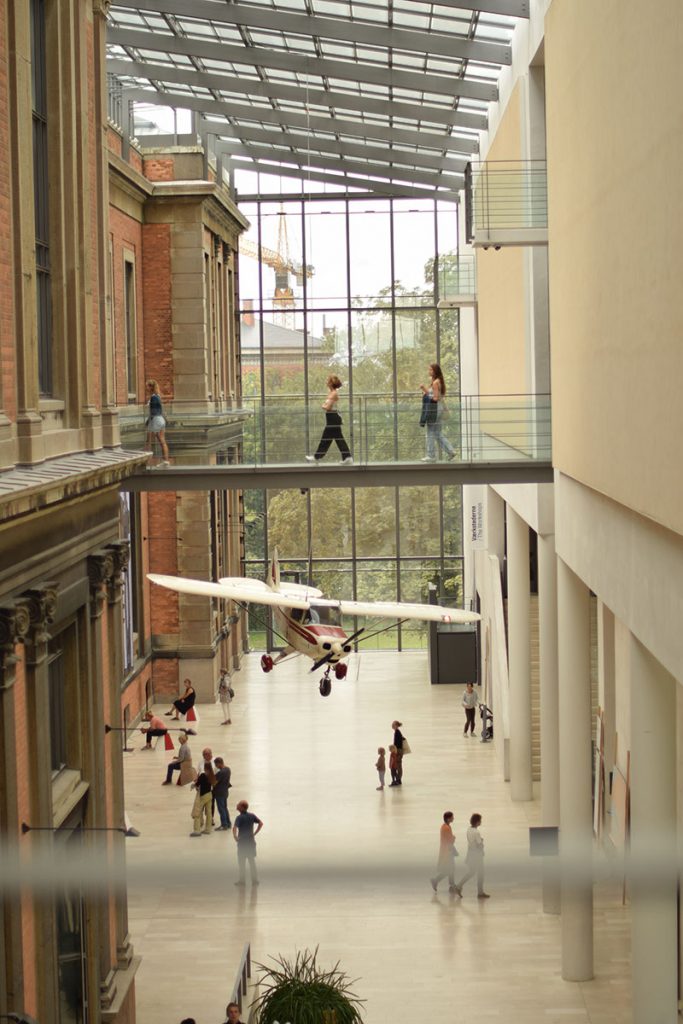
One of my favourite spaces at SMK is not actually a gallery, it is the Sculpture Street. This beautiful glass-roofed passage connects the museum’s original Italian Renaissance-inspired building with the modern extension.
Walking through this light-filled space feels like moving between two different eras of architecture. Historic details meet contemporary design, and sculptures are displayed alongside changing views of the city and park outside.
It perfectly captures what makes Copenhagen’s museum scene so special: the ability to honour the past while creating something new. It is a space where architecture becomes part of the artwork, and honestly, it is worth visiting even if you only have a short time at SMK.
More than an art museum
SMK is much more than a place to admire paintings. Through its exhibitions, talks, family activities, and interactive displays, the museum invites visitors to engage with art in meaningful ways. Here, you’ll discover how artists have interpreted history, identity, politics, religion, and everyday life across centuries.
The museum also plays a central role in preserving Denmark’s artistic heritage while showcasing innovative contemporary artists, making it a place where past and present continually meet.
MUSEUM SHOP
SMK’s museum shop is one of Copenhagen’s best for art and design lovers. Browse an excellent selection of exhibition catalogues, design books, art prints, stationery, homeware, jewellery, and gifts inspired by the museum’s collections. It’s the perfect place to find thoughtful souvenirs that reflect Denmark’s creative heritage.
CAFÉ: Kafeteria
Located inside the museum, Kafeteria is a popular spot for lunch, coffee, or homemade cakes. The menu focuses on seasonal Nordic ingredients, and the café’s relaxed atmosphere makes it an ideal place to take a break between galleries.
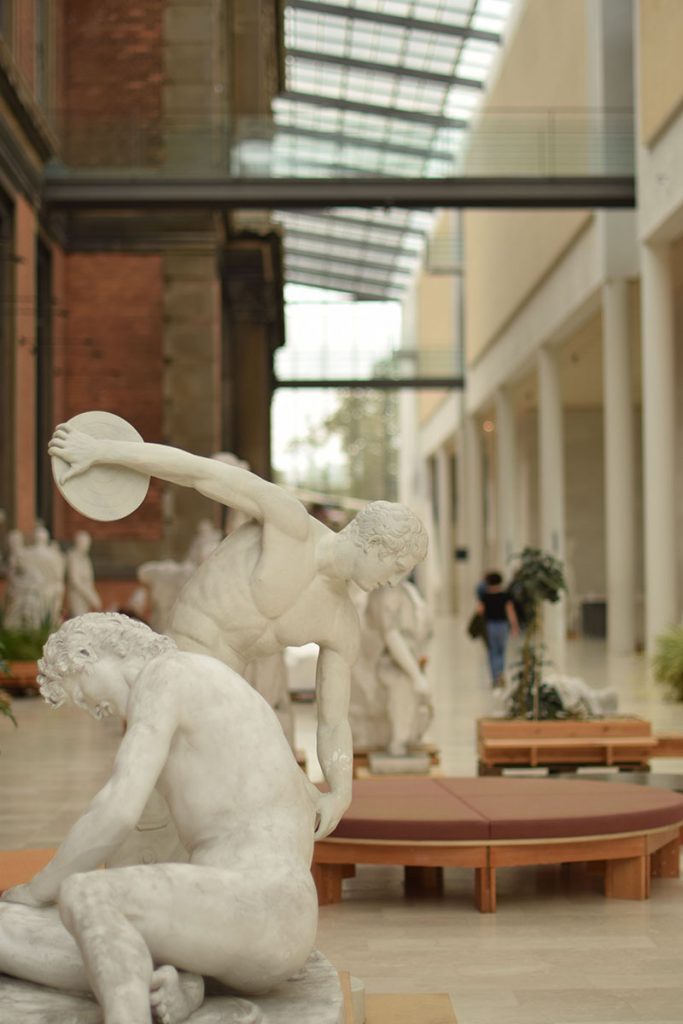
Designmuseum / The Danish Design Museum
Bredgade 68
Few countries have shaped the way we think about design quite like Denmark. From timeless furniture and elegant architecture to everyday objects that combine beauty with function, Danish design has become a global symbol of simplicity, craftsmanship, and thoughtful living.
At Designmuseum Danmark, visitors can explore the ideas, materials, and people behind this influential design tradition. Located in a beautiful former hospital near Amalienborg Palace, the museum is a celebration of creativity. From iconic Danish furniture and decorative arts to fashion, ceramics, graphic design, and contemporary innovation.
For anyone fascinated by architecture, interiors, craftsmanship, or the stories behind everyday objects, this is one of Copenhagen’s most inspiring museums.
Why visit Designmuseum Danmark?
Designmuseum Danmark offers a unique perspective on Danish culture: instead of looking only at paintings or historical objects, it explores the things that surround us every day and asks why good design matters.
The museum’s collection showcases the work of some of Denmark’s most influential designers, including Arne Jacobsen, Finn Juhl, Hans J. Wegner, Poul Kjærholm, Kaare Klint, and many others who helped define modern Scandinavian design.
Through furniture, textiles, ceramics, fashion, posters, and industrial design, the museum tells the story of how Denmark developed its reputation for functional, human-centred design. It reveals that Danish design is not just about beautiful objects. It is about improving everyday life.
Where design meets architecture
The museum building itself reflects Denmark’s architectural heritage. Designmuseum Danmark is housed in the former Frederik’s Hospital, an elegant Rococo complex. The historic buildings, courtyards, and carefully restored interiors create a beautiful setting for exploring modern design.
Frederik’s Hospital
Before you even explore the collections, take a moment to appreciate the building itself.
Designed in the 18th century by architects Nicolai Eigtved and Lauritz de Thurah. This elegant Rococo complex was originally built as Denmark’s first public hospital. Today, its carefully restored courtyards and historic rooms provide a beautiful setting for exploring Danish design.
The museum also has a strong connection to one of Denmark’s greatest design pioneers: Kaare Klint, often called the father of modern Danish furniture design. His influence shaped generations of Danish designers, and his focus on craftsmanship, functionality, and timeless forms continues to define Danish design today.
The contrast between the old architecture and the contemporary exhibitions perfectly captures a central idea of Danish design: respecting tradition while constantly looking forward.
The museum’s layout encourages visitors to slow down and appreciate details. From the materials, craftsmanship, and proportions to ideas behind each object. It is an experience that feels very connected to Copenhagen’s wider design philosophy.
More than a design museum
Designmuseum Danmark is not just a place to admire iconic chairs and beautiful objects. It tells the stories behind them: the designers who created them, the craftsmanship involved, and the social ideas that influenced their work.
The museum explores how design has shaped Danish homes, workplaces, and public spaces, connecting past innovations with the way we live today.
From the golden age of Danish furniture design to contemporary discussions about sustainability and responsible production, the museum shows how design continues to evolve.
Museum courtyard: Grønnegården garden
Don’t rush through the courtyard. With its historic architecture, greenery, and calm atmosphere, it is one of the museum’s most charming spaces and a perfect example of how Danish design extends beyond individual objects into the spaces we inhabit.
☞ The courtyard is a peaceful place to take a break from sightseeing.
Location
It is located in the elegant Frederiksstaden district, close to Amalienborg Palace, Marble Church, and the waterfront.
Opening Hours
Monday Closed (open during summer season)
Tuesday and Wednesday 10:00 am – 6:00 pm
Thursday 10:00 am – 8:00 pm
Friday to Sunday 10:00 am – 6:00 pm
Ticket Prices
Adults 140 DKK
Adults (under 27) 90 DKK
Students with valid ID 90 DKK
Visitors under 18 years free
MUSEUM SHOP
The museum shop is one of Copenhagen’s best destinations for design lovers. It offers a carefully selected collection of Danish and Scandinavian design pieces, including ceramics, jewellery, books, posters, textiles, kitchenware, and beautifully crafted souvenirs.
Rather than typical tourist gifts, you’ll find objects that represent Denmark’s design heritage. Making it the perfect place to take home a meaningful reminder of Copenhagen.
CAFÉ: Format
The museum café is a highlight in itself. Set in the historic surroundings of the former hospital complex, it offers a relaxed atmosphere where visitors can enjoy coffee, pastries, lunch, or a seasonal meal.
It is a lovely place to experience the Danish tradition of hygge. Taking time to enjoy simple pleasures in beautiful surroundings.
Location
The museum is centrally located, close to Strøget, Christiansborg Palace, and several other major attractions.
Opening Hours
Monday to Sunday 10:00 am – 5:00 pm
Ticket Prices
Adults 150 DKK (buy online 135 DKK)
Visitors under 18 years free
National Museum of Denmark
Ny Vestergade 10
To truly understand Copenhagen, you need to understand the stories that shaped it. From Viking voyages and medieval kingdoms to royal traditions, everyday life, and modern Danish society, the National Museum of Denmark offers the most complete journey through the country’s past.
Located in the heart of Copenhagen inside the magnificent Prince’s Palace, this is Denmark’s largest museum of cultural history. It is a place where centuries meet under one roof—a museum that goes beyond displaying objects and instead reveals the people, traditions, and events behind them.
For history lovers, families, and curious travellers who want to connect with Denmark beyond the postcard images, the National Museum is an essential stop.
Why visit the National Museum of Denmark?
The National Museum tells the story of Denmark from prehistoric times to the present day. Its vast collections include some of the country’s most important archaeological discoveries, royal treasures, historical objects, and cultural artefacts.
Highlights include the famous Viking Age collections, the mysterious Trundholm Sun Chariot, Bronze Age treasures, medieval religious art, Renaissance interiors, and fascinating exhibitions about Danish life through the centuries.
But the museum’s greatest strength is how it connects these objects to human stories. A Viking sword becomes a story about exploration and power. A piece of jewellery reveals beliefs and craftsmanship. A household object shows how ordinary people lived, worked, and celebrated.
Where history meets architecture
The museum is housed in the Prince’s Palace, an elegant 18th-century building that once served as a royal residence. Its grand halls, historic rooms, and impressive interiors create a fitting setting for Denmark’s national treasures.
Walking through the museum feels like moving through layers of Danish history. Not only through the exhibitions but also through the architecture itself. The building adds another dimension to the experience, reminding visitors that Copenhagen’s streets and buildings are living connections to the past.
This combination of art, architecture, and history reflects one of Copenhagen’s defining qualities: the city preserves its heritage while continuing to evolve.
The Prince’s Palace
Don’t forget to appreciate the building itself. The grand staircase, historic rooms, and elegant architecture are an important part of the museum experience and provide a beautiful contrast to the archaeological and cultural collections.
More than a history museum
The National Museum is not simply a place to look at old objects. It is a place to learn how Denmark became the country it is today.
Through immersive exhibitions, personal stories, and carefully preserved artefacts, visitors can explore themes such as migration, identity, traditions, social change, and everyday life. The museum encourages visitors to think about how the past continues to influence the present.
Families should check the programme for workshops and child-friendly activities.
MUSEUM SHOP
The National Museum shop is one of the best places in Copenhagen to find history-inspired souvenirs. Browse books, Viking-inspired jewellery, replicas, historical games, design objects, children’s gifts, and unique items connected to Denmark’s cultural heritage.
It is a great place to find a meaningful souvenir that tells a story rather than a typical tourist keepsake.
CAFÉ
The museum café offers a relaxing place to take a break during your visit. Enjoy coffee, pastries, lunch, or a light meal in the historic surroundings before continuing your journey through Denmark’s past.
Copenhagen Contemperary
Refshalevej 173A
Copenhagen has always been a city that respects its past while looking confidently toward the future. Nowhere is this creative spirit more visible than at Copenhagen Contemporary (CC), a dynamic international art centre where large-scale installations, immersive experiences, and experimental works transform a former industrial space into one of the city’s most exciting cultural destinations.
Located on Refshaleøen, a former shipyard area that has become one of Copenhagen’s most creative neighbourhoods, Copenhagen Contemporary represents a new chapter in the city’s museum scene. It is a place where art, architecture, technology, and ideas come together. Inviting visitors not just to observe art, but to experience it.
Why visit Copenhagen Contemporary?
Unlike traditional museums built around permanent collections, Copenhagen Contemporary focuses on ambitious temporary exhibitions by leading Danish and international artists. The museum specialises in installation art, performance, video, sound, and immersive experiences, often filling its enormous industrial halls with works that surround and involve the visitor.
This is contemporary art at its most experimental: unexpected, thought-provoking, and sometimes playful. You might walk through a room of light and sound, encounter a monumental sculpture, or find yourself part of an artwork rather than simply standing in front of one.
For visitors curious about where art is heading next, Copenhagen Contemporary offers a glimpse into the future of creative expression.
James Turrell‘s light art
Among Copenhagen Contemporary’s many impressive exhibitions, one of the most memorable experiences is the work of American artist James Turrell, whose immersive light installations explore the relationship between perception, space, and light.
Turrell’s work invites you to slow down and experience colour and light in a completely different way. Rather than simply looking at an artwork, you become part of the experience.
For me, this is one of the museum’s most magical experiences. A reminder that contemporary art does not always need to be understood immediately. Sometimes it simply needs to be experienced.
Where art meets architecture
The building itself is a major part of the experience. Housed in the former B&W shipyard welding hall, Copenhagen Contemporary occupies a vast industrial space with high ceilings, exposed structures, and a raw atmosphere that perfectly complements large-scale contemporary artworks.
The contrast between the building’s industrial past and its new cultural purpose reflects one of Copenhagen’s most inspiring qualities: the ability to transform historic spaces into creative hubs.
Refshaleøen itself has become a symbol of Copenhagen’s evolving design and architecture scene. A place where abandoned industrial areas are reimagined through food, culture, innovation, and art.
More than a contemporary art museum
Copenhagen Contemporary is not just about viewing artworks; it is about creating experiences and connections. Many exhibitions encourage visitors to move, interact, reflect, and see familiar ideas from new perspectives.
The museum also places strong emphasis on accessibility, education, and creative learning, offering activities, workshops, and programmes that make contemporary art approachable for visitors of all ages.
For those who sometimes find modern art intimidating, CC is an excellent introduction because the scale and atmosphere of the exhibitions create an immediate emotional experience. Even before you understand every artistic detail.
Location
The museum is located on Refshaleøen, so make the journey part of the experience.
Opening Hours
Monday Closed
Tuesday and Wednesday 11:00 am – 6:00 pm
Thursday 11:00 am – 9:00 pm
Friday to Sunday 11:00 am – 6:00 pm
Ticket Prices
Adults 140 DKK
Students with valid ID 95 DKK
Visitors under 18 years 25 DKK
Visitors under 3 years free
MUSEUM SHOP
The Copenhagen Contemporary shop offers a carefully selected range of art books, exhibition catalogues, prints, design objects, and creative souvenirs inspired by contemporary culture. It is a great place to find something unique and different from traditional museum gifts.
CAFÉ: Darcy’s
Copenhagen Contemporary has a café where visitors can enjoy coffee, drinks, and light refreshments while taking a break from the exhibitions. The surrounding Refshaleøen area also has some of Copenhagen’s most interesting food destinations, making it easy to turn your museum visit into a full afternoon.
Refshaleøen
Don’t rush away after visiting the museum. Refshaleøen is one of Copenhagen’s most exciting neighbourhoods, with a fascinating mix of industrial heritage, creative studios, restaurants, and waterfront views.
A visit here shows another side of Copenhagen—less polished and historic, but equally inspiring.
☞ Combine your visit with the area’s excellent restaurants, street food, galleries, and creative spaces. The industrial surroundings are especially enjoyable for architecture and design enthusiasts.
Location
The museum is located next to Tivoli Gardens and close to Copenhagen Central Station, making it easy to combine with other city highlights.
Opening Hours
Monday Closed
Tuesday and Wednesday 10:00 am – 5:00 pm
Thursday 10:00 am – 9:00 pm
Friday to Sunday 10:00 am – 5:00 pm
Ticket Prices
Adults 150 DKK (buy online 135 DKK)
Adults (under 27) 120 DKK (buy online 108 DKK)
Visitors under 18 years free
Free entry
The museum offers free admission on the last Wednesdays of each month
NY Carlsberg Glyptoteket
Dantes Plads 7
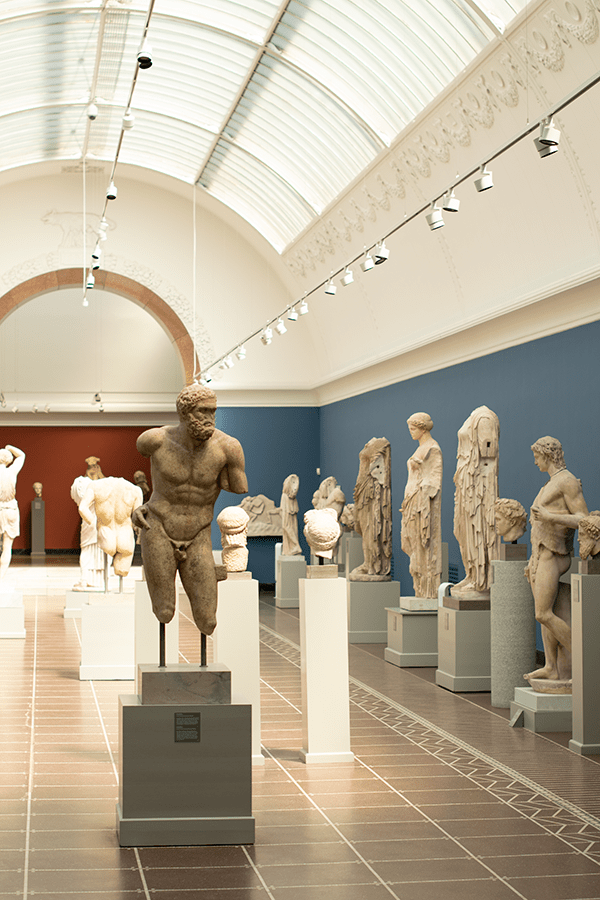
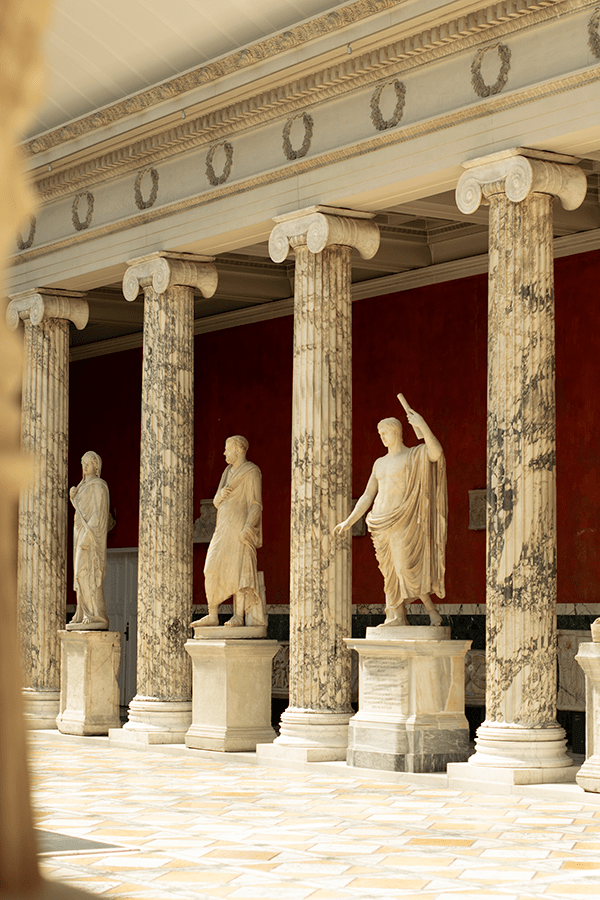
Few museums in Copenhagen capture the city’s love of beauty quite like Ny Carlsberg Glyptotek. More than just a collection of extraordinary artworks, the museum is an experience in itself. A place where ancient sculptures, Impressionist paintings, Mediterranean-inspired architecture, and a lush indoor garden come together under one magnificent roof.
Founded in 1897 by brewer and art collector Carl Jacobsen, son of the founder of Carlsberg, the Glyptotek reflects a deep Danish appreciation for art, craftsmanship, and thoughtful design. It is a museum where history and modern creativity meet, offering visitors a journey across civilisations while surrounded by some of Copenhagen’s most beautiful interiors.
Why visit Ny Carlsberg Glyptotek?
The Glyptotek is one of Copenhagen’s most unique museums because of the incredible range of its collections. Here, you can travel from ancient Egypt, Greece, and Rome to 19th-century France and Denmark’s Golden Age – all in a single visit.
The museum is especially famous for its impressive collection of ancient sculptures, including Greek and Roman masterpieces, as well as one of Northern Europe’s finest collections of ancient Mediterranean art.
Art lovers will also appreciate the museum’s outstanding collection of French paintings, featuring works by artists such as Monet, Renoir, Degas, Cézanne, Van Gogh, and Rodin. Danish artists are also beautifully represented, creating a fascinating dialogue between local and international artistic traditions.
The Glyptotek is not simply about looking at objects from the past. It is about understanding the cultures, ideas, and human stories behind them.
Where art meets architecture
The architecture is one of the main reasons people fall in love with the Glyptotek. From the moment you enter, the museum feels more like a cultural palace than a traditional gallery.
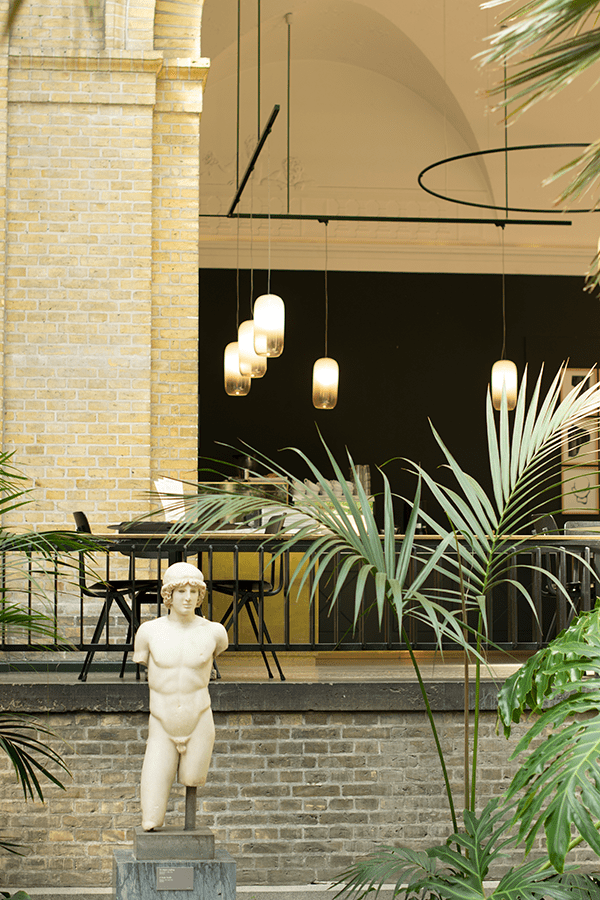
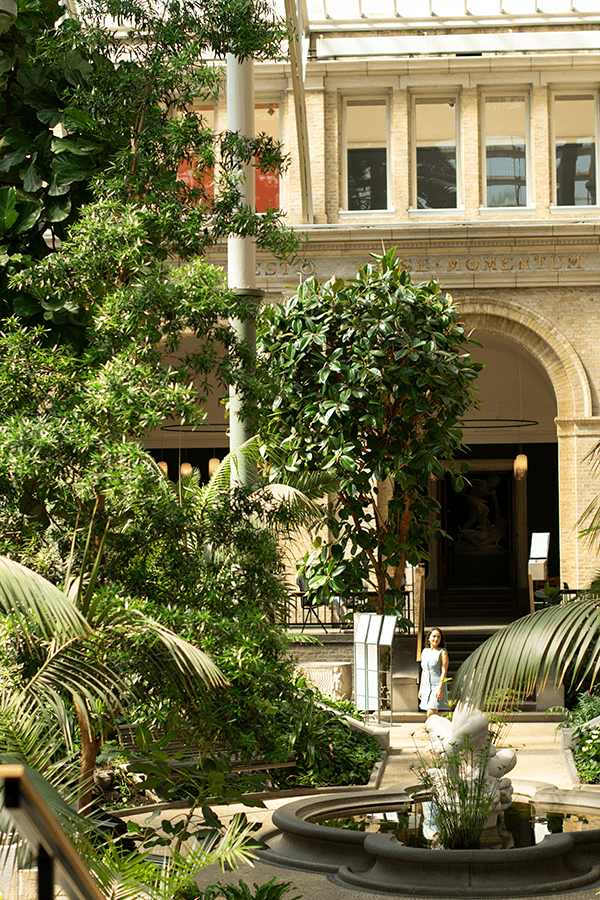
The Winter Garden
Even visitors with limited time should make space for the Winter Garden. With its tropical plants, historic atmosphere, and beautiful architecture, it is one of the city’s most enchanting indoor spaces.
The museum’s different wings reveal changing architectural styles, from elegant classical galleries to atmospheric rooms inspired by Mediterranean landscapes. Every corner feels carefully designed, reflecting the same Danish attention to detail found throughout the city’s famous design scene.
More than an art museum
The Glyptotek tells stories that stretch across thousands of years. Ancient sculptures reveal beliefs and traditions from long-lost civilisations, while paintings capture changing ideas about beauty, nature, and everyday life.
Carl Jacobsen believed that art should enrich people’s lives, and that philosophy remains central to the museum today. Visitors are encouraged not only to admire masterpieces but also to slow down, reflect, and enjoy the surroundings.
The museum’s atmosphere makes it especially welcoming for those who may not normally consider themselves “museum people.” Sometimes the highlight is not a single artwork. It is a quiet moment in the Winter Garden, a beautifully designed gallery, or a surprising connection between past and present.
The rooftop terrace
Make your way upstairs to discover one of Copenhagen’s most beautiful rooftop terraces. From here, you can enjoy wonderful views across the city, including a unique perspective over Tivoli Gardens.
It is the perfect place to pause after exploring the galleries and appreciate Copenhagen from above.
MUSEUM SHOP
The Glyptotek shop is one of Copenhagen’s most beautiful museum shops, offering art books, exhibition catalogues, posters, jewellery, home accessories, and carefully selected design objects inspired by the museum’s collections.
It is an excellent place to find elegant souvenirs connected to art, history, and Danish design.
CAFÉ: Picnic
The museum café is a destination in itself. Located beside the Winter Garden, it offers a unique setting surrounded by palms, architecture, and natural light. Enjoy coffee, cake, lunch, or a glass of wine while taking in one of Copenhagen’s most memorable museum environments.
OUTSIDE OF COPENHAGEN
Louisiana Museum of Modern Art
Gammel Strandvej 13, 3050 Humlebæk
A short journey north of Copenhagen takes you to one of Denmark’s most extraordinary cultural destinations: Louisiana Museum of Modern Art. Set on the coast in Humlebæk, surrounded by gardens, sculptures, and breathtaking views of the Øresund Strait, Louisiana is more than a museum—it is an experience that perfectly captures the Danish relationship between art, architecture, and nature.
Often described as one of the world’s most beautiful modern art museums, Louisiana has become an essential destination for anyone visiting Copenhagen. Its unique combination of internationally renowned art, thoughtful architecture, peaceful landscapes, and a relaxed atmosphere makes it unlike any other museum in Denmark.
Why visit Louisiana Museum of Modern Art?
Louisiana’s collection focuses on modern and contemporary art from 1945 to the present day, featuring works by some of the most influential artists of the 20th and 21st centuries. Visitors can discover masterpieces by Pablo Picasso, Alberto Giacometti, Andy Warhol, David Hockney, Yayoi Kusama, and many others.
Yayoi Kusama’s “Gleaming Lights of the Souls”
Among Louisiana’s many unforgettable experiences, one of the most magical is the permanent installation “Gleaming Lights of the Souls” by Yayoi Kusama.
Inside the mirrored room, countless reflections of illuminated lights create the feeling of floating endlessly through space. It is a quiet, almost meditative experience that completely changes your sense of scale and surroundings.
Kusama’s installation perfectly reflects what makes Louisiana special: art is not separated from the visitor. It surrounds you, involves you, and creates a moment you remember long after leaving.
However, Louisiana’s true magic lies in how the artworks are presented. Instead of following a traditional museum layout, exhibitions unfold through interconnected rooms, glass corridors, and outdoor spaces where art interacts with the surrounding landscape.
The museum encourages visitors to slow down and experience art differently. A sculpture viewed against the sea becomes something completely different from the same work inside a gallery. A painting seen through a window connects with the changing Danish light outside.
Where art meets architecture
Louisiana is one of the finest examples of Danish architecture’s ability to blend buildings with their surroundings. Designed by architects Wilhelm Wohlert and Jørgen Bo, the museum developed gradually from a 19th-century villa into a series of low, modernist buildings that follow the natural landscape.
The architecture is intentionally understated. Long glass corridors, warm materials, and carefully positioned windows create a seamless connection between inside and outside. The museum never competes with the art or nature. It creates a space where all three can exist together.
For architecture enthusiasts, Louisiana is a must-visit. It represents a central idea in Scandinavian design: beauty comes from harmony, simplicity, and respect for the environment.
More than a modern art museum
Louisiana is not simply a place to view famous artworks. It is a place to spend time, reflect, and connect. The museum’s founders believed art should be accessible and part of everyday life, creating an environment where visitors of all ages can feel welcome.
Beyond exhibitions, Louisiana hosts concerts, artist talks, workshops, film screenings, and cultural events. Its children’s wing is also one of Denmark’s best, making it a wonderful destination for families.
The museum tells stories about creativity, society, and the human experience—showing how modern art can help us understand the world around us.
Sculpture Park and Gardens
The outdoor sculpture park is one of Louisiana’s defining features. Works by artists including Henry Moore, Alexander Calder, and Richard Serra are placed throughout the gardens, creating a unique dialogue between art, architecture, and nature.
Take time to wander rather than simply walk through—the landscape is designed as part of the museum experience.
Location
Louisiana is located approximately 35 minutes from Copenhagen by train, making it an easy and rewarding day trip.
Opening Hours
Monday Closed
Tuesday to Friday 10:00 am – 10:00 pm
Saturday and Sunday 10:00 am – 6:00 pm
Ticket Prices
Adults 145 DKK
Students with valid ID 130 DKK
MUSEUM SHOP
The Louisiana shop is one of the most famous museum shops in Denmark and a destination for design lovers. It offers an exceptional selection of art books, design objects, jewellery, ceramics, posters, home accessories, and gifts from Danish (from HAY, Vipp and Carl Hansen & Søn) and international designers.
Many visitors consider it one of the best places to find sophisticated souvenirs that reflect Denmark’s creative spirit
CAFÉ
The Louisiana café is a highlight of the visit. With large windows overlooking the sea and sculpture garden, it offers one of the most beautiful dining settings in Denmark.
The menu focuses on seasonal ingredients and simple Nordic cooking, making it a perfect place for lunch, coffee, or a pastry while enjoying the view.
Location
ARKEN is located approximately 30 minutes from Copenhagen by train and bus, making it an easy half-day trip. Combine your visit with a walk along Ishøj Beach or through the nearby nature areas.
Opening Hours
Monday to Wednesday 11:00 am – 5:00 pm
Thursday 11:00 am – 9:00 pm
Friday 11:00 am – 5:00 pm
Saturday and Sunday 10:00 am – 5:00 pm
Ticket Prices
Adults 150 DKK
Students with valid ID 130 DKK
Visitors under 18 years free
ARKEN – Museum of Modern Art / Museum for Moderne Kunst
Skovvej 100, 2635 Ishøj
South of Copenhagen, where the city meets the coast, you will find ARKEN Museum of Modern Art. striking destination where contemporary art, dramatic architecture, and the landscape of Køge Bay come together.
Designed to resemble a ship emerging from the shoreline, ARKEN is one of Denmark’s most distinctive museum buildings. Its bold architecture, ambitious exhibitions, and seaside setting offer a completely different experience from Copenhagen’s more classical museums.
While museums such as Thorvaldsens Museum, SMK, and the National Museum connect visitors with Denmark’s artistic and cultural heritage, ARKEN represents Copenhagen’s adventurous side: experimental, international, and constantly looking toward the future.
Why visit ARKEN?
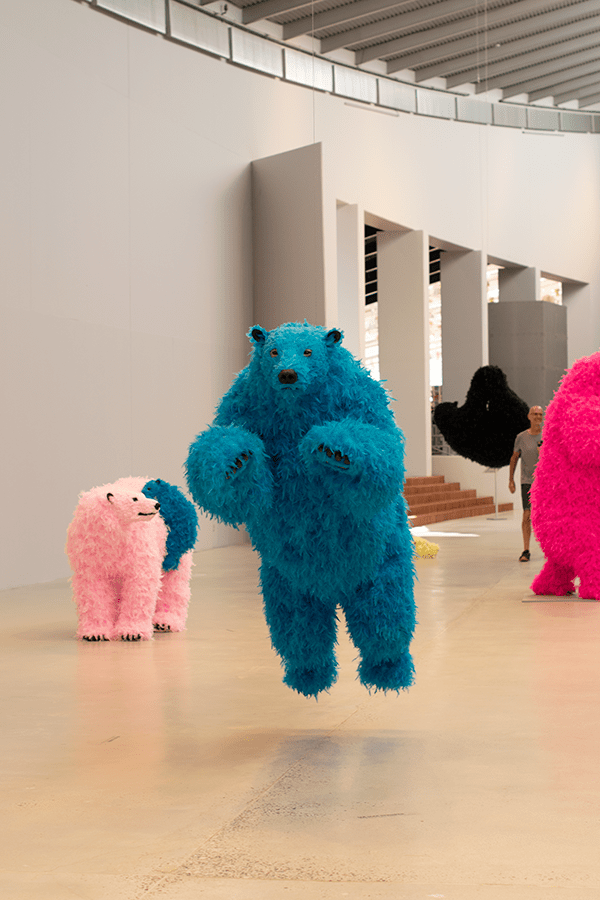
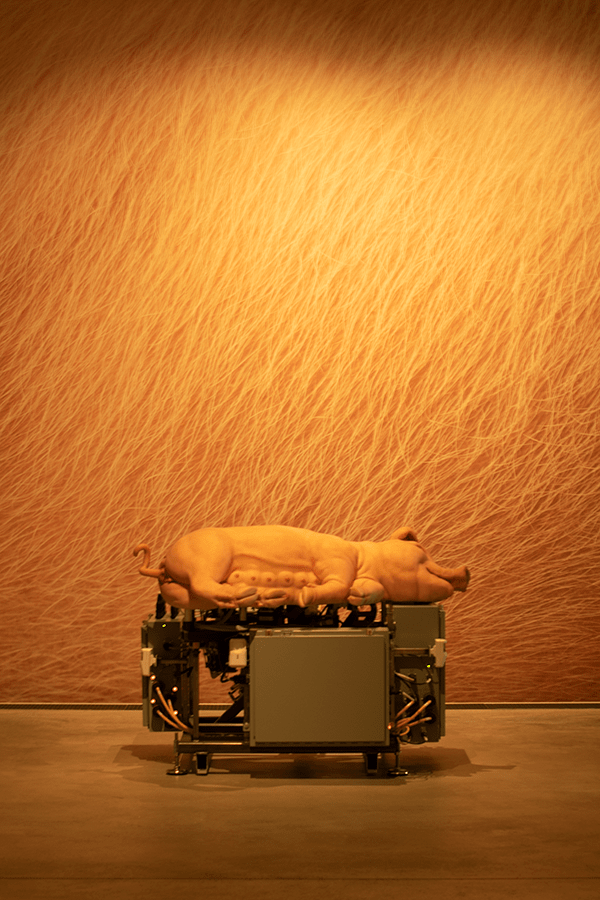
ARKEN specialises in modern and contemporary art, with a collection focused on Danish and international artists from the 1990s onwards. The museum is particularly known for large-scale installations, conceptual works, photography, sculpture, and challenging contemporary exhibitions.
Visitors can discover works by artists such as Damien Hirst, Ai Weiwei, Anish Kapoor, Olafur Eliasson, and Yoko Ono, alongside changing exhibitions that explore current themes in society, culture, and the environment.
ARKEN is a museum that encourages curiosity. Some artworks may surprise you, challenge you, or invite different interpretations but that is part of the experience. It is less about finding one correct answer and more about engaging with ideas.
Where art meets architecture
Architecture lovers will find ARKEN just as fascinating as the art inside. Designed by Danish architect Søren Robert Lund, the building opened in 1996 and was inspired by the shape and movement of a ship.
Sharp angles, concrete surfaces, long corridors, and dramatic exhibition spaces create a powerful atmosphere. The architecture feels almost sculptural, transforming the museum itself into part of the artistic experience.
The beach and sculpture landscape
The surrounding landscape adds another layer. The nearby coastline and open landscape create a beautiful contrast to the museum’s dramatic architecture.
Take a walk after your visit and experience the same horizon and natural surroundings that inspired the museum’s design.
Like much of Danish design and architecture, ARKEN demonstrates how a building can influence the way we experience the world around us.
More than a modern art museum
ARKEN is not simply a place to see contemporary artworks. It is a place to explore ideas about society, identity, nature, technology, and the future.
Through exhibitions, events, talks, and educational programmes, the museum encourages visitors to participate in conversations about the world we live in. Families, art enthusiasts, and first-time visitors to contemporary art can all find something engaging here.
The museum also highlights the relationship between humans and nature, with its location offering a chance to combine culture with a coastal walk.
MUSEUM SHOP
The ARKEN shop is a great place to find contemporary and design-focused souvenirs. It offers art books, exhibition catalogues, posters, jewellery, creative gifts, and objects connected to current exhibitions and modern design.
For visitors looking for something less traditional and more artistic, it is a fantastic place to browse.
CAFÉ
The ARKEN café offers a relaxed setting with views towards the surrounding landscape. Enjoy coffee, cake, lunch, or a seasonal meal while taking a break from the exhibitions.
The café complements the museum experience by offering a moment to slow down and enjoy the atmosphere.
For Design Enthusiasts:
☞ Designmuseum
☞ Louisiana
☞ Glyptoteket
For History Nerds:
☞ National Museum
☞ Thorvaldsens
☞ Kunsthal Christiansborg
For Art Lovers:
☞ Hirschsprung Collection
☞ SMK
☞ Louisiana
FAQ about museums in Copenhagen
Which Copenhagen museums are worth visiting if you only have one day?
If time is limited, I’d recommend: SMK – Statens Museum for Kunst, Ny Carlsberg Glyptotek and Thorvaldsens Museum. Together they offer an excellent introduction to Danish art, architecture, and history.
Which museums in Copenhagen are free?
Several museums offer free admission, either permanently or on selected days.
SMK – Statens Museum for Kunst offers free admission to its permanent collection year-round.
Many museums, including Thorvaldsens Museum, Ny Carlsberg Glyptotek, The Hirschsprung Collection, and Kunsthal Charlottenborg, have weekly or monthly free admission hours.
Visitors under 18 can enter most museums free of charge. As opening hours and special offers occasionally change, it’s always worth checking the museum’s official website before your visit.
Is the Copenhagen Card worth it?
If you plan to visit several museums and use public transport, the Copenhagen Card is excellent value. The card includes free admission to many of Copenhagen’s top museums. Including SMK’s special exhibitions, Ny Carlsberg Glyptotek, Designmuseum, The National Museum, Thorvaldsens Museum, Louisiana Museum, ARKEN, and many more. As well as unlimited travel on buses, trains, and the metro within the Copenhagen region. For first-time visitors planning to explore several attractions over two or three days, it can quickly pay for itself.
Are museums in Copenhagen closed on Mondays?
Yes, many of Copenhagen’s museums are closed on Mondays. A few museums, such as Copenhagen Contemporary, are open every day, while opening hours can vary during holidays and special exhibitions. It’s always a good idea to check opening times before your visit.
What else should I do near Copenhagen’s museums?
Many of Copenhagen’s museums are located close to some of the city’s most iconic attractions.
In the inner city, you can easily jump from one attraction to the other. Thorvaldsens Museum is next to Christiansborg Palace. Ny Carlsberg Glyptotek is just steps from Tivoli Gardens. Designmuseum Danmark is within walking distance of Amalienborg Palace, Frederik’s Church (the Marble Church), and Nyhavn. SMK and The Hirschsprung Collection sit beside Østre Anlæg and the Botanical Garden.
Copenhagen Contemporary is located on Refshaleøen, home to creative restaurants, cafés, and waterfront walks.
Can you visit Louisiana and ARKEN without a car?
Yes, both museums are easy to reach by public transport. Louisiana is around 35 minutes by train from Copenhagen Central Station, while ARKEN is about 30–40 minutes by train and bus.
