
A Love Letter to Glyptoteket in Copenhagen
Some museums impress you with what hangs on their walls. The Ny Carlsberg Glyptotek captivates you before you’ve even looked at a single artwork.
From the moment you arrive at Dantes Plads, there’s a quiet sense that this isn’t going to be an ordinary museum visit. The red-brick façade rises with understated elegance, almost hiding in plain sight between Tivoli Gardens and Copenhagen’s bustling city centre. It doesn’t compete for attention. It simply waits to be discovered.
Step inside and the pace of the city begins to fade. The sounds of traffic give way to the gentle echo of footsteps on marble, daylight spills through grand windows, and every doorway seems to hint at another beautiful room waiting just beyond. Before you lose yourself in ancient sculptures or Impressionist paintings, take a moment to appreciate the building.
The Ny Carlsberg Glyptotek isn’t simply a museum that houses art. It’s a carefully composed work of art in its own right. The museum has expanded several times since it first opened, creating a fascinating blend of architectural styles. As someone who can spend just as much time admiring a building as the collection inside it, this is where the Glyptotek truly won me over.
It’s the kind of place that rewards curiosity.
Whether you’re a first-time visitor or someone returning to Copenhagen, give yourself the gift of an unhurried hour here. The Glyptotek offers a welcome reminder that travel isn’t always about seeing more. Sometimes it’s about seeing things more slowly.
PAUSE HERE
Before you go any further, pause in the entrance for just a few seconds. Don’t worry about maps or finding the “must-see” rooms.
Instead, notice how the museum unfolds before you. The Glyptotek is best experienced with curiosity rather than a checklist.
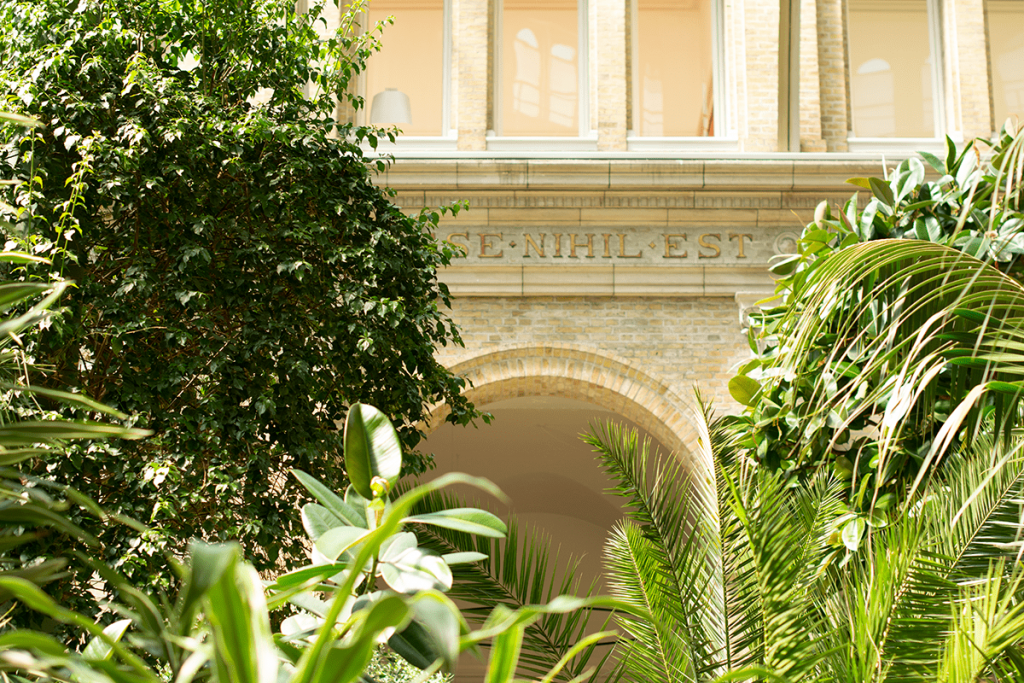
A Story Worth Knowing: the Glyptotek’s story begins with beer
The museum began with one man’s belief that art should be shared rather than hidden away. Carl Jacobsen, best known as the son of the founder of Carlsberg, was far more than a brewer. He was an avid collector, a passionate patron of the arts and a lifelong admirer of architecture.
During his travels across Europe, particularly in Italy, he developed a deep appreciation for the harmony between art, history and beautifully designed spaces. He didn’t simply collect sculptures and paintings; he imagined a home where they could be experienced in surroundings worthy of their beauty.
What started as Carl Jacobsen’s personal collection has, over more than a century, grown into one of Europe’s most remarkable museums. Today, the Glyptotek houses more than 10,000 works spanning 6,000 years of history, from ancient Egypt and Classical Antiquity to French Impressionism and Denmark’s Golden Age. Yet despite the extraordinary breadth of its collection, it never feels overwhelming.
Copenhagen’s Most Dreamlike Museum
As someone who rarely visits a city without seeking out its architecture, I quickly realised that the museum itself is every bit as captivating as the collection it holds. Some museums feel like a series of white rooms designed to showcase the artwork. The Glyptotek is the opposite.
Long before I found my favourite sculptures or stood in front of a famous painting, I found myself admiring the symmetry of an archway, the craftsmanship of a mosaic floor and the way natural light softened the marble throughout the galleries. It’s one of those rare places where the building isn’t simply a backdrop for the art. It becomes part of the experience. It encourage you to wander without a plan.
Unlike many museums designed as one continuous space, the Glyptotek has grown organically over more than a century. Each architectural wing reflects the ideals of its own time, creating a journey through different styles, materials and atmospheres. The different transitions invite you to experience the museum slowly, almost as though you’re wandering through a sequence of elegant European palaces. Every gallery flows naturally into the next, every doorway offers a carefully framed glimpse of what lies ahead, and every architectural detail gently encourages you to linger a little longer. It’s less a museum to conquer than one to experience: one room, one sculpture and one quiet moment at a time.
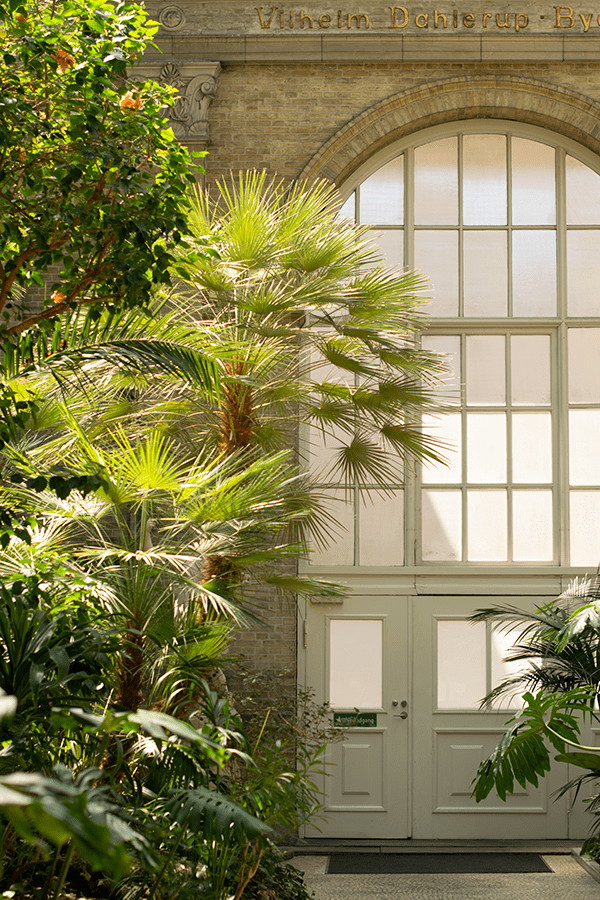
Sunlight filtering through the glass dome.
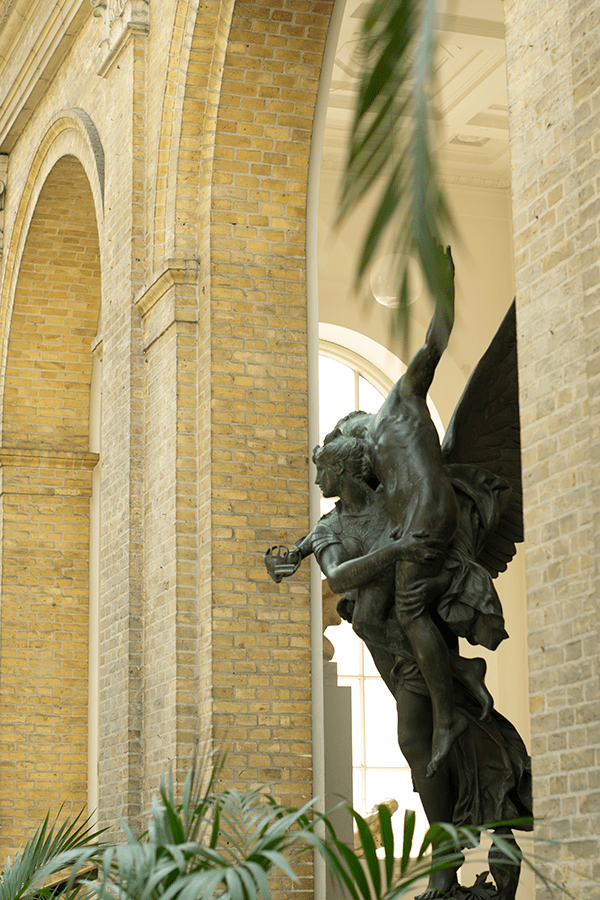
Hidden courtyards waiting around unexpected corners.
Look Up, Look Down, Fall in Love: The Glyptoteket Experience
Carl Jacobsen admired and was influenced by the great museums and palaces of Italy. That can be felt throughout the museum, from its harmonious proportions and classical symmetry to the generous use of marble, columns and richly decorated interiors. The Glyptotek captures the spirit of Renaissance architecture: a celebration of beauty, proportion, craftsmanship and the idea that architecture should inspire as much as the art it protects.
For architecture lovers, this is what makes the museum unforgettable. Before you find your favourite sculpture or painting, the Glyptotek quietly asks something else of you. Look up. Look down. Look through. It sounds simple, but it completely changes the way you experience the museum. The paintings and sculptures may be the reason you visit. But, believe me, it’s the building itself that lingers in your memory long after you’ve left.
If there’s one piece of advice I’d give before your visit, it’s this: don’t spend the entire time looking straight ahead.
LOOK UP
Let’s begin by looking up.
Some of the museum’s greatest masterpieces are above eye level. Before you admire the sculptures, admire the ceilings.
Every corner has been designed with the same artistic care as the collections themselves. Magnificent domes filter daylight into the galleries, decorative ceilings reveal intricate craftsmanship, and elegant arches create a rhythm that naturally guides you from one space to the next.
Grand staircases become sculptural centrepieces in their own right, while tall arched windows flood the interiors with ever-changing natural light that transforms the marble throughout the day.
LOOK DOWN
Once you’ve admired the ceilings, lower your gaze.
Beauty often begins beneath your feet. Before you search for paintings, notice how the light moves across the marble.
The mosaic tile floors here are stunning in their own right: floral patterns, swirling motifs, and colors that echo the art they accompany. Notice how their geometric patterns echo the symmetry of the domes and arches above, creating a quiet dialogue between floor and ceiling.
Every step feels intentional, as though the architecture is quietly encouraging you to slow your pace. We spend so much time looking at paintings that we forget some of the museum’s finest craftsmanship lies beneath our feet.
LOOK THROUGH
Now follow the marble.
Before you hurry to the next gallery, pause beneath a doorway. Some of the museum’s most beautiful compositions are created by the building itself.
Walking through its galleries feels like travelling through a collection of elegant European palaces, each wing revealing its own personality.
One room feels grand and ceremonial, another intimate and contemplative. Wide marble galleries suddenly revealing a quiet courtyard just beyond an arch.
Even the transitions between rooms feel theatrical, revealing new spaces little by little rather than all at once. It’s this attention to perspective that makes wandering through the Glyptotek feel almost cinematic.
One of my favourite details is the way the museum frames its sculptures. Marble figures appear perfectly centred within doorways, beneath vaulted ceilings or at the end of long corridors, almost like carefully composed paintings.
There is always another beautiful perspective waiting around the corner.
Somewhere between looking up, looking down and looking through, you realise something. The Glyptotek isn’t asking you to move faster. It’s asking you to notice more.
Every doorway leads somewhere beautiful.
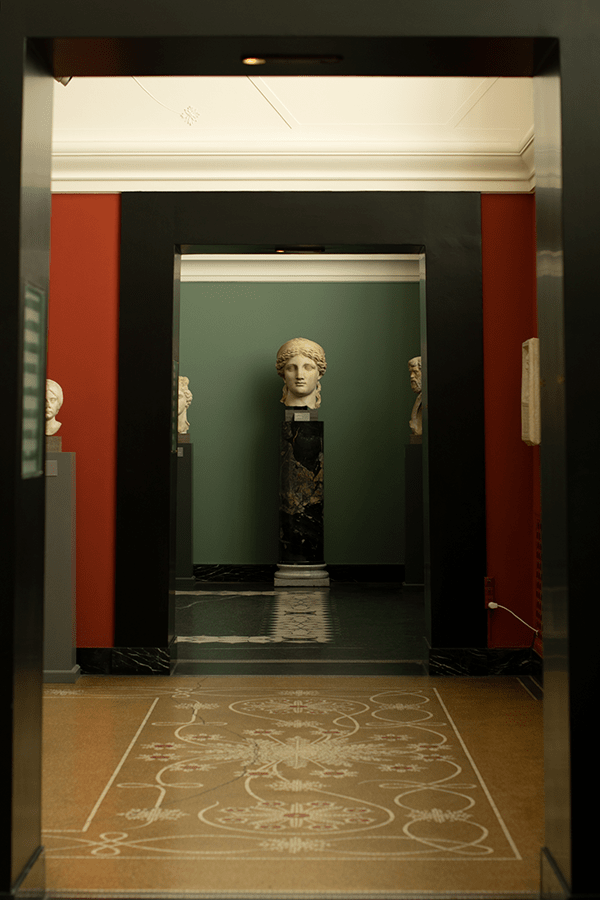
Elegant doorways framing statues as though they’ve been carefully composed for a photograph.
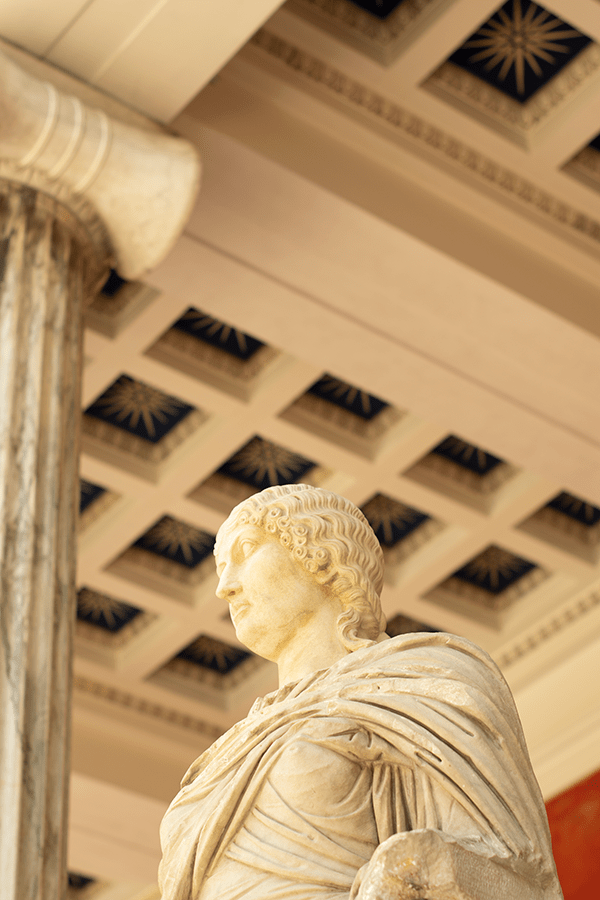
Small details that encourage you to slow your pace.
Find the Oasis: The Winter Garden
Every great city has a place where time slows down.
Eventually, every path through the Glyptotek leads to the same place. Not because signs point you there, but because the building seems to gently draw you in. The first thing you’ll notice isn’t what you see. It’s what you feel. The pace changes. The air feels softer.
The sounds of the museum become quieter until they’re replaced by the gentle rhythm of trickling water and hushed conversations. Above you, towering palm trees reach effortlessly towards the glass dome, their leaves catching the changing daylight as marble sculptures quietly keep watch below. For a moment, it’s easy to forget you’re in the middle of Copenhagen.
Honestly? Even if you never stepped into the galleries, this garden alone would be worth your visit.
The Winter Garden feels almost Mediterranean, inspired by the grand conservatories and elegant courtyards of nineteenth-century Europe. Classical columns frame the space, lush greenery softens the marble architecture, and the fountain at its centre becomes the museum’s heartbeat. It’s the kind of room that asks nothing of you except to stay a little longer.
☞ And yes, the light in this place screams for a photo. If you’re a photographer, or just someone who appreciates good shadows and golden rays, bring your camera.
LOOK CLOSER
Stand in the centre of the Winter Garden and look up before looking around. It’s the quickest way to appreciate how architecture and nature were designed to exist together.
Find a seat before reaching for your camera. Close your guidebook, put your phone away for a moment and simply listen. The fountain, the rustle of the palms and the quiet conversations drifting through the atrium are just as much a part of the museum as the sculptures themselves.
Sometimes the moments you remember most aren’t the ones printed on the museum map.
The Water Mother by Kai Nielsen
There are sculptures you admire. And then there are sculptures that quietly ask you to stay a little longer. For me, that sculpture is The Water Mother by the Danish sculptor Kai Nielsen.
This stunning sculpture shows a serene woman, carved in pale marble, breastfeeding a small army of infants clambering across her body. It’s strange, beautiful, and unforgettable and perfectly placed in this indoor garden.
It’s no surprise that so many visitors return here between galleries. Some come to rest their feet. Others open a sketchbook, lose themselves in a novel or simply sit in quiet conversation. It feels less like a pause between exhibitions and more like an exhibition in itself. A living room where architecture, nature and art exist in perfect harmony.
Café Picnic
Perhaps that’s why Café Picnic feels so perfectly at home here.
Instead of hiding away in a corner of the museum, the café embraces the atmosphere of the Winter Garden. Tables spill out beneath the palms, the scent of freshly brewed coffee mingles with the greenery, and every seat seems to offer a different perspective of the room.
It’s the kind of café where lunch quietly turns into coffee, coffee turns into cake (try the lemon tart!), and before you know it, you’ve spent an hour simply watching the museum unfold around you.
PAUSE HERE AND STAY AWHILE
Café Picnic isn’t just somewhere to refuel.
Order whatever catches your eye and resist the urge to rush. Some of the Glyptotek’s finest moments happen when you stop moving altogether.
When you’re ready, leave the palms behind and continue your journey. The museum has another story waiting just beyond the next doorway.
Walk Through Time
Some journeys are measured in kilometres. This one is measured in centuries.
Leaving the Winter Garden feels a little like stepping back into the world after a quiet retreat. Yet instead of returning to the present, the Glyptotek gently carries you backwards through time. One doorway leads to another, and suddenly you’re no longer in nineteenth-century Copenhagen.
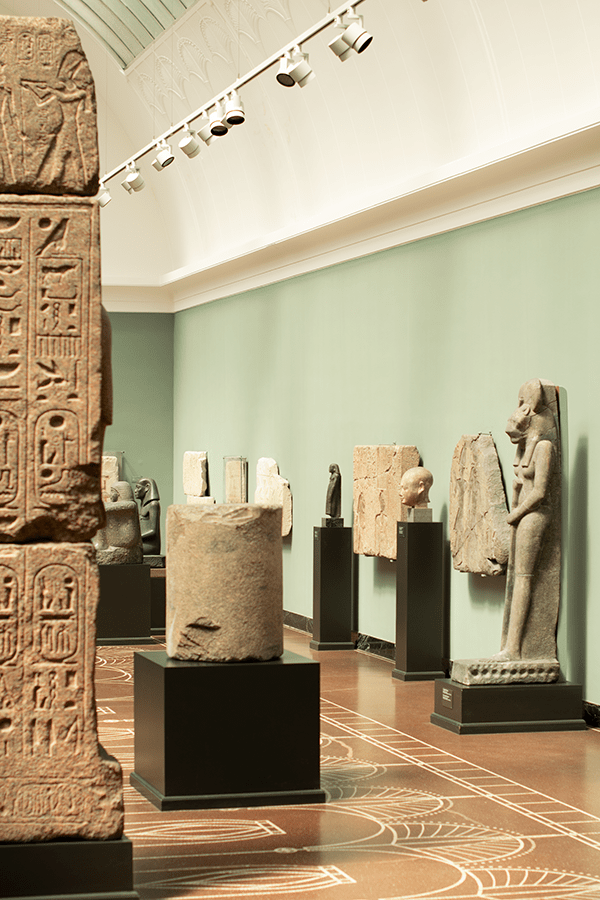
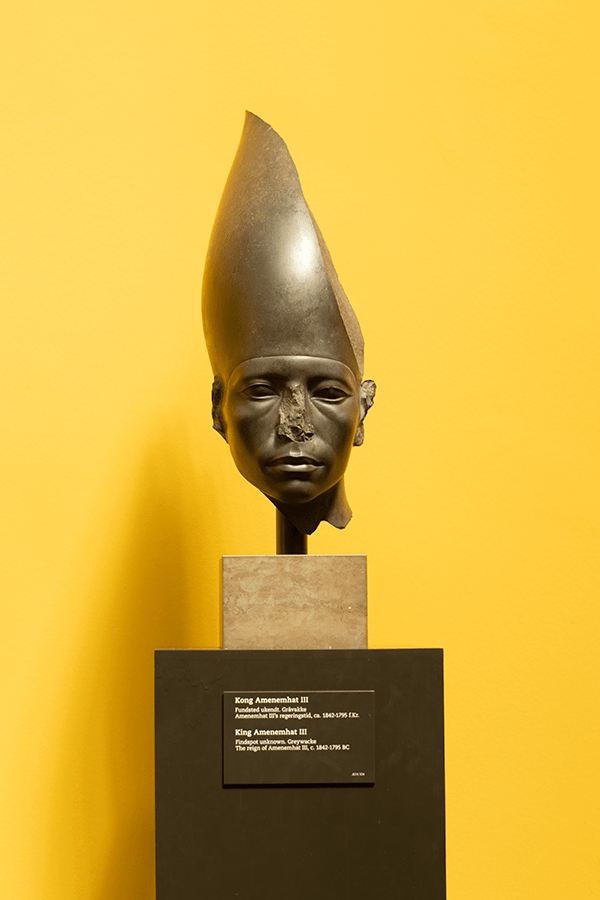
You’re standing face to face with ancient Egypt.
The galleries here feel calm and contemplative – like stepping into a quiet tomb. The stone walls and carefully lit displays allowing beautifully preserved sarcophagi, animal sculptures, temple reliefs, mummies and hieroglyphs to speak for themselves. Glyptoteket’s Egyptian Collection is one of the most extensive in Northern Europe, with artifacts spanning 3000 years of ancient history. Thousands of years may separate us from the people who created them, but there’s something remarkably intimate about being offered a glimpse into one of the world’s oldest civilisations.
LOOK CLOSER
Notice how the colours of the mosaics often echo the walls and ceilings above. The rooms feel balanced because every surface has been considered.
☞ The lotus flower tiles in the Egyptian collection is a favourite of mine. An elegant touch that deepens the immersive experience.
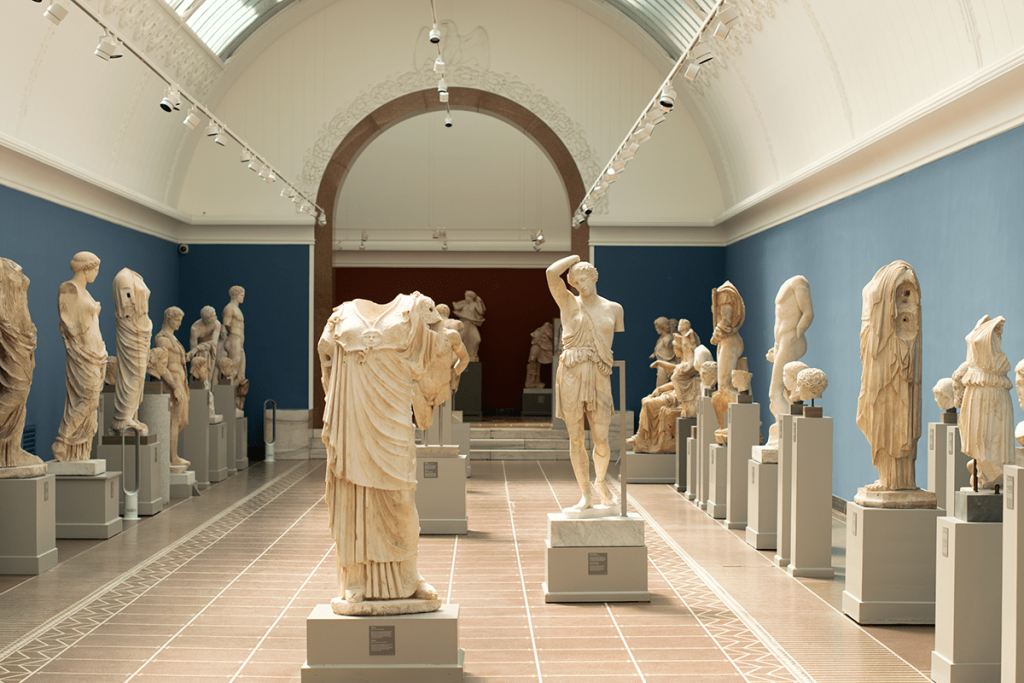
From there, the journey continues into ancient Greece and Rome, where marble takes centre stage. These galleries are among the museum’s highlights.
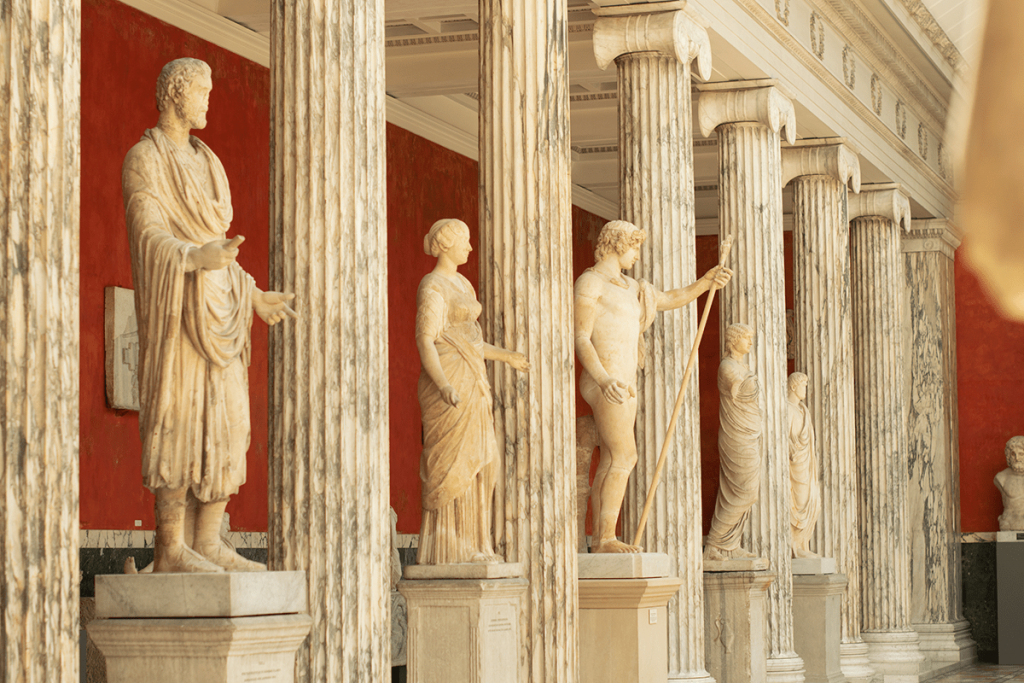
Filled with graceful marble gods, athletes, mythical heroes, philosophers and emperors stand frozen in graceful poses, each sculpture revealing an extraordinary understanding of movement, anatomy and proportion. It’s one of the finest collections of classical sculpture in Northern Europe. It’s impossible not to notice how naturally these classical works belong within the museum’s architecture. Marble columns echo marble statues, while grand arches frame each figure as though the building itself was designed to honour them.
LOOK CLOSER
Don’t just admire the sculptures. Don’t rush through the corridors. Some of the museum’s most beautiful compositions aren’t paintings at all. They’re the way a doorway perfectly frames a sculpture waiting in the next room.
Notice the spaces between them. The generous galleries, long sightlines and perfectly balanced proportions allow every piece room to breathe, making each encounter feel both intimate and monumental.
Sometimes the moments you remember most aren’t the ones printed on the museum map.
A gallery of noses: The Nasothek (Yes, really)
Now for something completely unexpected.
Hidden among the museum’s remarkable collections is one of its most quirkiest little rooms: the Nasothek. Quite literally, a gallery of noses.
It might seem amusing. Shelves lined with plaster casts of noses, mouths, ears, eyes and other facial features are probably not what most visitors expect to find in one of Copenhagen’s grandest museums.
In the 19th century, it was common to “restore” antique sculptures by adding missing parts like noses, fingers, and limbs to make them look “complete.” But as the art world moved toward respecting the original condition of artifacts, these additions were removed. Instead of tossing the leftovers, Glyptoteket put them on display.
Now, over 100 disembodied marble noses are lined up in a surreal and fascinating exhibit. It’s funny, bizarre, and weirdly poetic. A tiny corner of the museum that sticks with you.
As you continue, something quietly begins to shift. The marble gives way to colour. The galleries become lighter. The atmosphere softens.
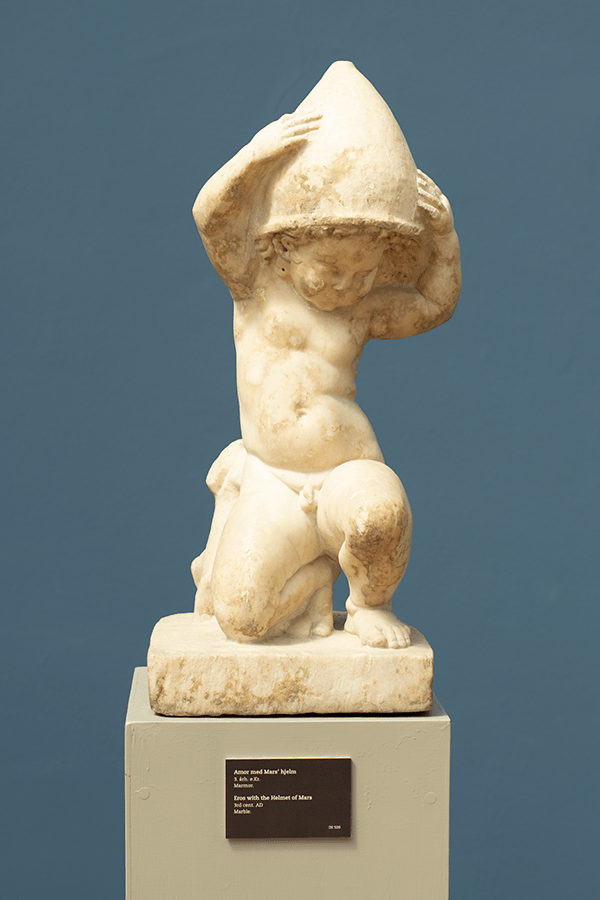
You find yourself surrounded by the luminous world of the French Impressionists.
If the classical galleries celebrate permanence, these rooms celebrate the fleeting beauty of a single moment. Sunlight dancing across water. A passing glance. The movement of a ballerina. The changing colours of a landscape.
It’s one of my favourite transitions in the entire museum. Not only because of the remarkable collection, but because the architecture allows the change to happen so naturally. Without ever feeling abrupt, the museum gently carries you from the timeless perfection of antiquity into an age fascinated by light, emotion and everyday life.
Among the highlights are the expressive sculptures of Auguste Rodin and the graceful bronze dancers of Edgar Degas. Although both artists worked in sculpture, they capture movement in beautifully different ways. Rodin’s figures feel raw and powerful, their surfaces alive with emotion and texture. While Degas’ dancers appear almost weightless, balancing strength with remarkable elegance. Seeing their works in conversation with one another is a quiet reminder that sculpture can be every bit as expressive as painting.
Nearby, masterpieces by Claude Monet and Paul Gauguin fill the galleries with colour, atmosphere and light. Together, they create a striking contrast to the cool marble rooms you’ve just left, yet the transition never feels disconnected. Throughout the museum, architecture continues to guide the journey, gently linking thousands of years of artistic expression into one beautifully choreographed experience.
WORTH KNOWING
Carl Jacobsen believed that art should inspire curiosity across cultures and centuries. Rather than separating collections into isolated worlds, the Glyptotek invites them into conversation, allowing ancient civilisations, Renaissance ideals and modern artists to coexist beneath one roof.
By now, you may find yourself slowing your pace without even realising it. That’s the quiet magic of the Glyptotek. The further you wander, the less it feels like moving through a museum and the more it feels like travelling through time itself.
Climb a Little Higher: The rooftop terrace
Every journey deserves one last view.
Before you leave the Glyptotek, there’s one final stop that’s well worth making. If the rooftop terrace is open during your visit, take the stairs (or the lift) and climb a little higher.
After spending hours immersed in marble galleries, palm-filled courtyards and centuries of art, stepping onto the rooftop feels like quietly resurfacing into the present. Copenhagen unfolds around you in a patchwork of terracotta rooftops, copper spires and tree-lined streets, while Tivoli Gardens peeks through the cityscape with its historic rides and lush gardens.
From here, the Glyptotek reveals another side of itself. Looking out across the city, you begin to appreciate how perfectly the museum is woven into Copenhagen’s urban fabric. The grand civic buildings of Vester Voldgade, the leafy calm of Dantes Plads and the vibrant energy of the city centre all seem to converge here. It’s a reminder that while the museum invites you to step away from the pace of the city, it has always been deeply connected to it.
LOOK BEYOND
Look beyond the skyline. Try framing the rooftops with the museum’s own architectural details—a balustrade, an arch or a sculptural element. The Glyptotek has a wonderful way of becoming part of the photograph, even when you’re looking outwards.
When you’re ready, head back downstairs.
Walk through the galleries one last time.
You might be surprised by how different they feel now.
Beyond the Museum
One of the Glyptotek’s loveliest surprises waits outside.
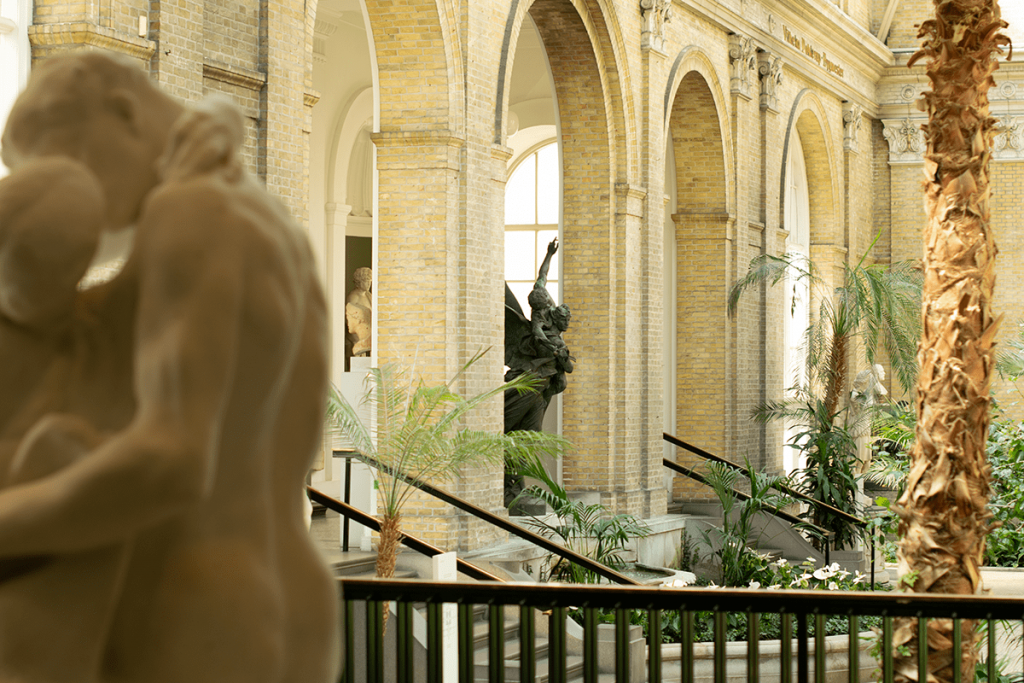
Tucked behind the museum is a peaceful sculpture garden that many visitors never discover. Open to everyone and free to explore, it feels like a quiet extension of the museum itself. A place where art and nature meet beneath the open sky.
Winding paths lead through seasonal flowers, mature trees and carefully placed sculptures, inviting you to slow down before returning to the bustle of the city. It is the kind of place where you can linger on a bench, read a book or simply enjoy a few moments of calm surrounded by art.
Among the highlights is Auguste Rodin’s iconic sculpture, The Thinker (Grubleren in Danish). Seeing one of the world’s most recognisable sculptures outdoors, framed by greenery rather than gallery walls, gives it an entirely different presence.
Whether you’ve spent hours exploring the museum or are simply passing by, the sculpture garden is well worth a visit. It offers one last reminder of what makes the Glyptotek so special: here, art is never confined to the exhibition rooms. It spills into the architecture, the gardens and even the quiet spaces in between.
Nearby Places
The Glyptotek is perfectly placed for a day spent exploring the heart of Copenhagen.
After your visit, you’re only a short stroll from Tivoli Gardens, the National Museum of Denmark, Christiansborg Palace and Strøget. If you’d rather stay in the quieter surroundings of Dantes Plads, simply find a bench outside the museum and take a moment to reflect before continuing your day.
A few things worth knowing before your visit:
Location
The Ny Carlsberg Glyptotek is located just a short walk from Tivoli Gardens and Copenhagen Central Station, making it easy to include in almost any city itinerary.
Opening hours
Closed Monday
Tuesday and Wednesday 10:00 am – 5:00 pm
Thursday 10:00 am – 9:00 pm (perfect if you’d like to experience the museum in the quieter evening hours)
Friday to Sunday 10:00 am – 5:00 pm
Ticket Prices
Adults 150 DKK (buy online 135 DKK)
Students with valid ID (or under 27) 120 DKK (buy online 108 DKK)
Visitors under 18 years free
Free entry
The museum offers free admission on the last Wednesday each month
Leave Looking Differently
The best journeys don’t always take us somewhere new. Sometimes they simply change the way we see.
Somewhere between the mosaics beneath your feet and the glass dome above your head, you begin to realise that the Ny Carlsberg Glyptotek isn’t asking you to simply admire great works of art. It’s asking you to notice beauty.
In the way sunlight moves slowly across polished marble. In the quiet symmetry of an archway. In the gentle rhythm of a fountain echoing beneath towering palms. In a sculpture that reveals something new each time you walk around it. In a room full of plaster noses that reminds you great art begins with careful observation. And perhaps most of all, in the quiet pleasure of wandering without feeling the need to hurry.
When I think back on my visit, I don’t immediately remember the order of the galleries or every artwork I admired. Instead, I remember how the museum made me feel. Curious. Calm. Present. It reminded me that travel isn’t always about discovering somewhere new. Sometimes it’s about discovering a new way of looking at the places we find ourselves in.
